See What Breaks, How Often, and For How Long
Equipment downtime tracking software logs every equipment stoppage — the moment a machine or asset goes down, why it failed, who responded, and how long it took to bring it back online — in one system. In maintenance and facility operations, the repair itself may be handled quickly, but the record of that downtime often disappears the moment the machine is running again.
This happens when breakdowns are reported over WhatsApp, chalked on a whiteboard in the workshop, and summarised in Excel by an admin at the end of the month. When downtime data is scattered like this, nobody can answer the questions that actually matter: which asset breaks most often, how long repairs really take, and how much production or SLA time is lost each month.
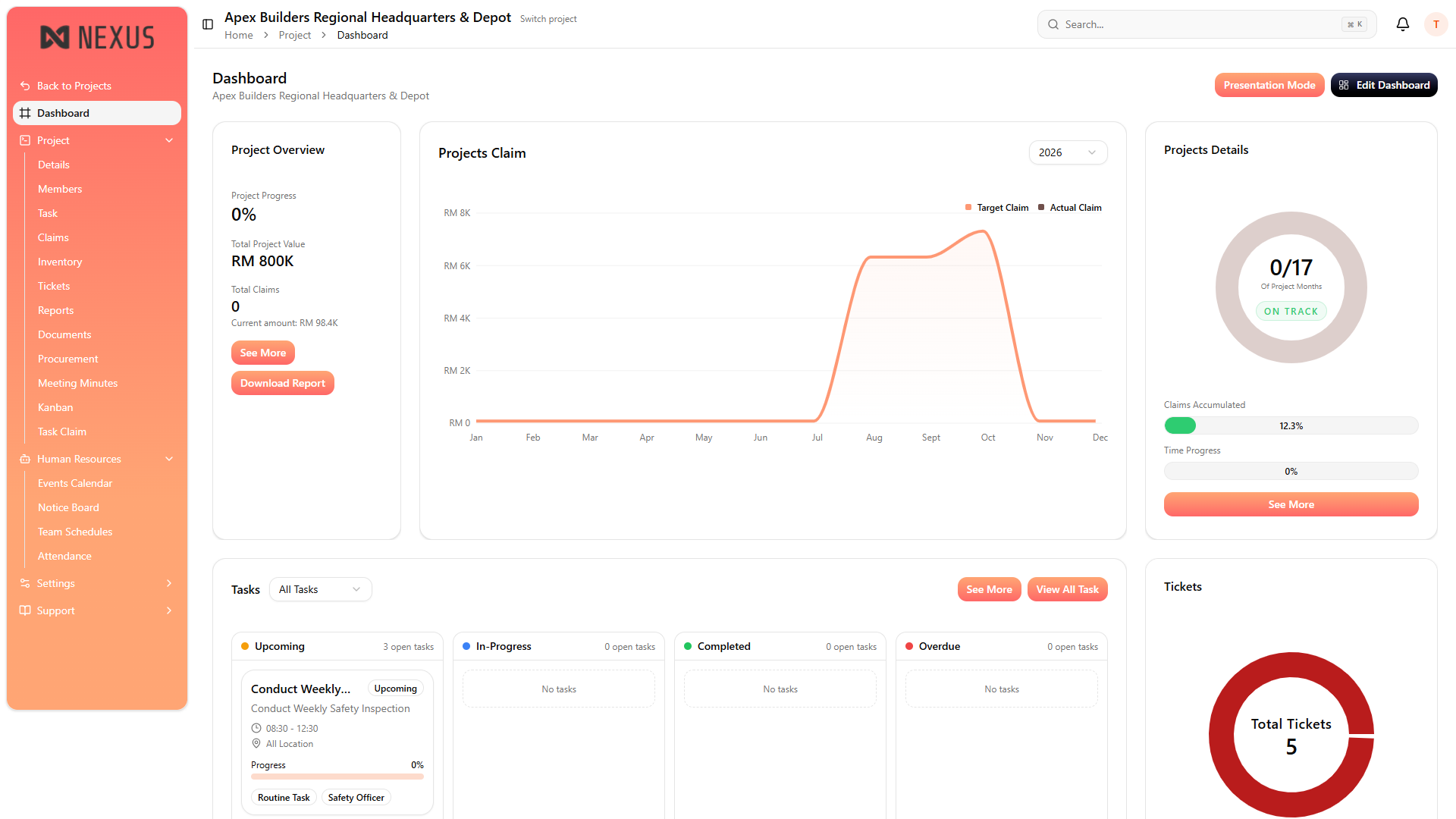
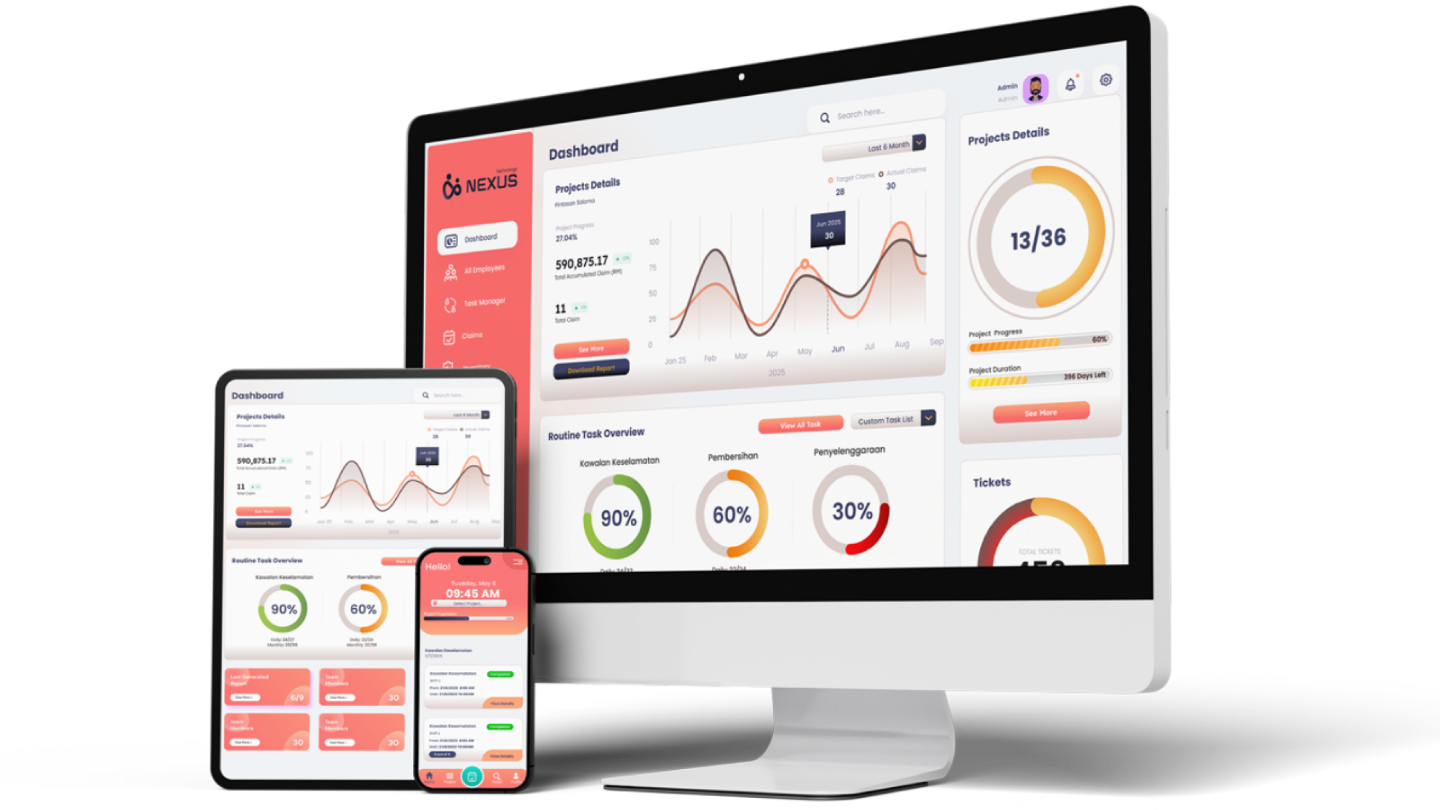
With Nexus ICMMS, downtime becomes measurable because the stoppage log, repair work order, spare parts used, technician response and the resulting reports are all recorded in one platform.
Why Equipment Downtime Tracking Software Matters
Most operations do not lose money because a machine breaks once. They lose it because the same failures repeat quietly, and nobody has the data to see the pattern.
Common issues we see in Malaysian operations include:
- Breakdowns are reported over WhatsApp and forgotten once the machine restarts.
- There is no record of why an asset failed, only that it was fixed.
- Nobody can say which equipment is the worst repeat offender.
- Repair time is estimated from memory, not measured.
- Spare parts are used without being linked to the asset that consumed them.
- Management sees a monthly total but no breakdown by asset, site or cause.
For companies running critical assets across multiple sites — common in factory maintenance, facility management and local authority operations — this blind spot is expensive. Without structured downtime tracking, every breakdown is treated as a one-off instead of a data point. This is why dedicated equipment downtime tracking software matters: it turns scattered breakdown reports into numbers you can act on.
When Downtime Isn't Logged, the Real Cost Stays Invisible
In maintenance work, a repair that gets done quickly still carries a hidden cost if it is never recorded. The machine was down for three hours. Two technicians were pulled off other jobs. A part was replaced. Production or an SLA target slipped. If none of that is captured, the operation only feels the symptom — missed output, LAD exposure, rising overtime — without ever seeing the cause.
Three numbers separate operations that control downtime from those that only react to it: MTTR (mean time to repair) tells you how fast you recover, MTBF (mean time between failures) tells you how reliable an asset really is, and availability tells you what percentage of planned time the asset was actually usable. You cannot calculate any of them without a clean downtime log.
When the log is missing, planning breaks down too. You cannot justify replacing an aging asset, you cannot schedule preventive maintenance around real failure patterns, and you cannot prove to a client or auditor that a stoppage was handled within the agreed response window.
How Nexus ICMMS Helps
Nexus ICMMS works as an integrated maintenance management system that captures downtime from the first report instead of reconstructing it at month-end. For a broader look at what an ICMMS actually does, see our plain-English ICMMS guide.
Each downtime event can store the asset, start and end time, failure reason, responding technician, spare parts used, photo evidence and supervisor sign-off. When all of this lives in one platform, downtime stops being a guess and becomes a report.
With Nexus, teams can:
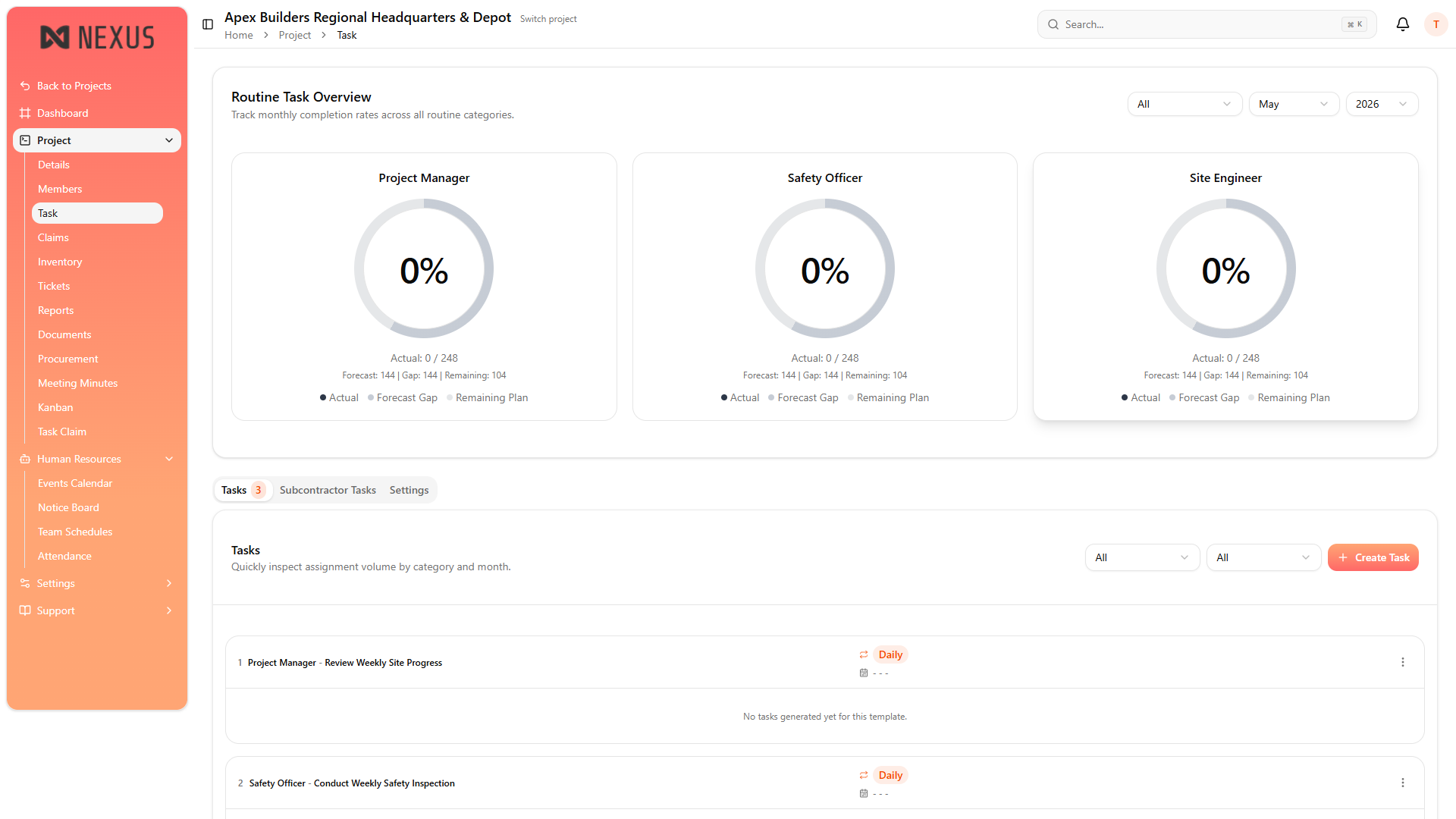
- Log every breakdown and repair as a structured work order with NexTask.
- Capture start time, end time and downtime duration automatically, not from memory.
- Link spare parts consumed to the asset that failed using NexInventory.
- Record which technician responded and how fast with NexStaff.
- Attach photo and GPS evidence of the fault and the completed repair.
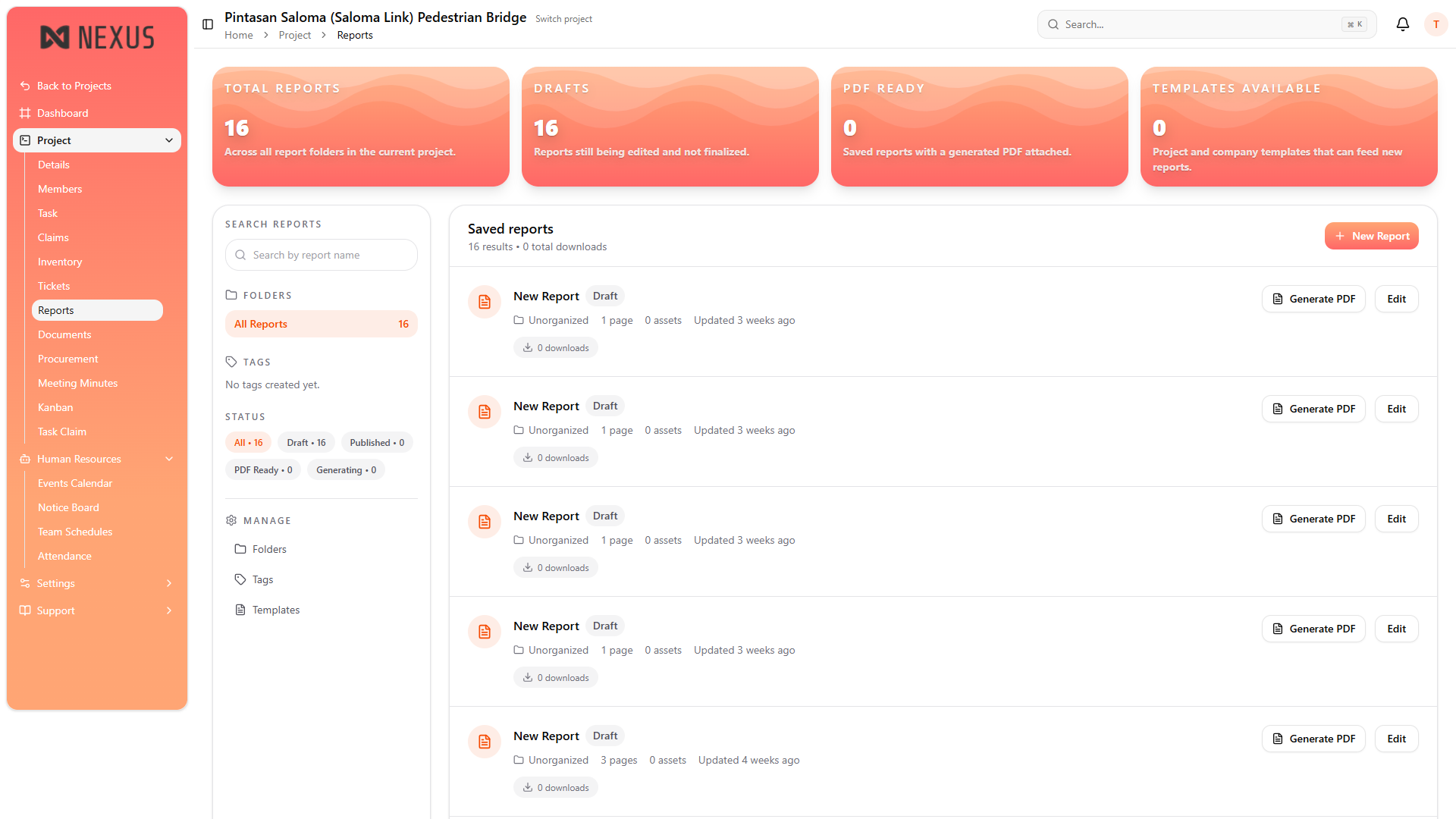
- Generate downtime, MTTR and availability reports automatically through NexReport.
- Compare downtime by asset, site and failure cause across the whole portfolio.
- Spot repeat-offender equipment before it fails again.
As an automated reporting system, Nexus removes the month-end scramble of piecing breakdown history together. The data is already structured the moment the repair is closed.
Manual Downtime Logs vs Nexus
| Manual Logging | With Nexus |
|---|---|
| Breakdowns reported over WhatsApp and whiteboards | Every stoppage logged as a structured event |
| Downtime duration estimated from memory | Start, end and duration captured automatically |
| No link between a failure and the parts used | Spare parts tied to the asset that consumed them |
| Nobody knows the worst repeat-offender asset | Downtime ranked by asset, site and cause |
| MTTR and availability are guesses | MTTR, MTBF and availability calculated from real data |
| Month-end report built from scratch | Reports auto-generated from live downtime data |
| No proof a stoppage was fixed within SLA | Timestamped, photo-backed repair record for every event |
Five Things Malaysian Operators Should Demand
For any equipment downtime tracking software a team evaluates, the same five capabilities tend to separate a real system from a simple logbook app:
- One structured downtime log tied to each asset, not a chat thread that disappears after the fix.
- Automatic duration capture so MTTR and availability come from timestamps, not estimates.
- Spare-parts and technician linkage so every repair shows its true cost.
- Auto-generated reports in BM with timestamps that survive a five-year audit and align with JKR reporting expectations.
- Multi-site rollup so management sees downtime across every location, not one site at a time.
Who Should Use Nexus?
Nexus is suitable for factory and plant maintenance teams, facility management companies, M&E contractors, property and building management teams, utilities and infrastructure operators, local authority operations and any operation that runs critical equipment it cannot afford to lose.
If your team still tracks breakdowns on a whiteboard and WhatsApp, Nexus can help as a facility management software Malaysia solution that keeps equipment downtime visible, measurable and audit-ready. Teams already digitising inspections and field audits get downtime tracking on the same platform.
Conclusion
Equipment downtime is rarely expensive because of a single breakdown. It is expensive because the same failures repeat and the data to prove it never gets captured. When stoppages are reported over WhatsApp and summarised from memory, MTTR, MTBF and availability stay invisible — and so does the case for fixing the root cause.
As equipment downtime tracking software, Nexus brings the stoppage log, repair work order, spare parts, technician response and reports into one platform. With clean downtime data, teams recover faster, management sees which assets are really failing, and every repair is backed by a record that survives an audit.
FAQ
What is equipment downtime tracking software? It is a digital system that logs every equipment stoppage — start and end time, cause, technician, parts used and repair proof — and turns that history into downtime, MTTR and availability reports.
How is downtime duration measured? Nexus timestamps when a breakdown is reported and when the repair work order is closed, so downtime duration and MTTR are calculated from real data instead of estimates.
Can it show which equipment fails most often? Yes. Because every breakdown is logged against a specific asset, Nexus can rank downtime by asset, site and failure cause so you can see the repeat offenders.
Does it work across multiple sites? Yes. Downtime from every site rolls up into one view, so management can compare reliability and response times across the whole portfolio.
Are the reports available in Bahasa Melayu? Yes. Downtime and maintenance reports support BM natively, which matters for JKR and PBT compliance submissions.
Is Nexus suitable for factories and facility maintenance? Yes. Nexus suits factory and plant maintenance, facility management, M&E contractors and local authority operations. For multi-site coordination, see also how multi-site operators cut LAD penalties.
Still tracking equipment breakdowns on a whiteboard and WhatsApp?
Use Nexus to bring downtime logs, repair work orders, spare parts and reports into one platform. Book a demo today and see how much downtime your operation can actually measure — and recover.